Blend
Reimagining a tipping experience that feels meaningful for both customers and baristas.
- Role
- UX/UI Designer Service Designer Video Prototyper
- Team
- Clemens Chen Peter Lin Louise Liu Ivy Tseng Kelly Zhong
- Tools
- Figma, CapCut, Adobe Photoshop, Adobe Illustrator
- Topics
- Service Design, Customer Service, Experience Prototyping
- Timeline
- 7 weeks
- Status
- UW MHCI+D studio project
At a Glance
The Problem
Tipping at cafes has become a source of social discomfort and awkwardness for both customers and baristas. Digital tipping screens at the point of sale ask for a tip decision before the customer has even received the service — and reduce a moment that should feel like appreciation into a transactional obligation.
My Approach
With a team of five, designed Blend — a service-design solution that combines a mobile app, a POS terminal system, and a physical employee stamp to reimagine the tipping experience at local cafes. I led UI design for the Blend POS terminal and the video prototyping of the final solution, and co-conducted field investigations and customer interviews, crafting personae and the customer journey map.
Overview
Tipping at cafes has become a source of social discomfort and awkwardness for both customers and baristas.
We developed Blend, a tipping solution that combines a mobile app, a POS terminal system, and a employee stamp to create a more meaningful experience for both customers and baristas.
My Contribution
My primary responsibilities included leading the UI design for the Blend POS terminal system and the video prototyping of our Blend design solution.
Moreover, I co-conducted field investigations and interview with customers and baristas at local cafes and crafted personae and customer journey map.
Problem
Tipping at cafes in Seattle leads to social discomfort and awkwardness for both customers and baristas.
- 66%of U.S. Adults have a negative view about tipping.Bankrate Survey
- 50%of U.S. Adults tipped due to social pressure.WalletHub
- 40%of U.S. Adults "strongly or somewhat oppose" a list of suggested tips.Pew Research Center
Design Outcome
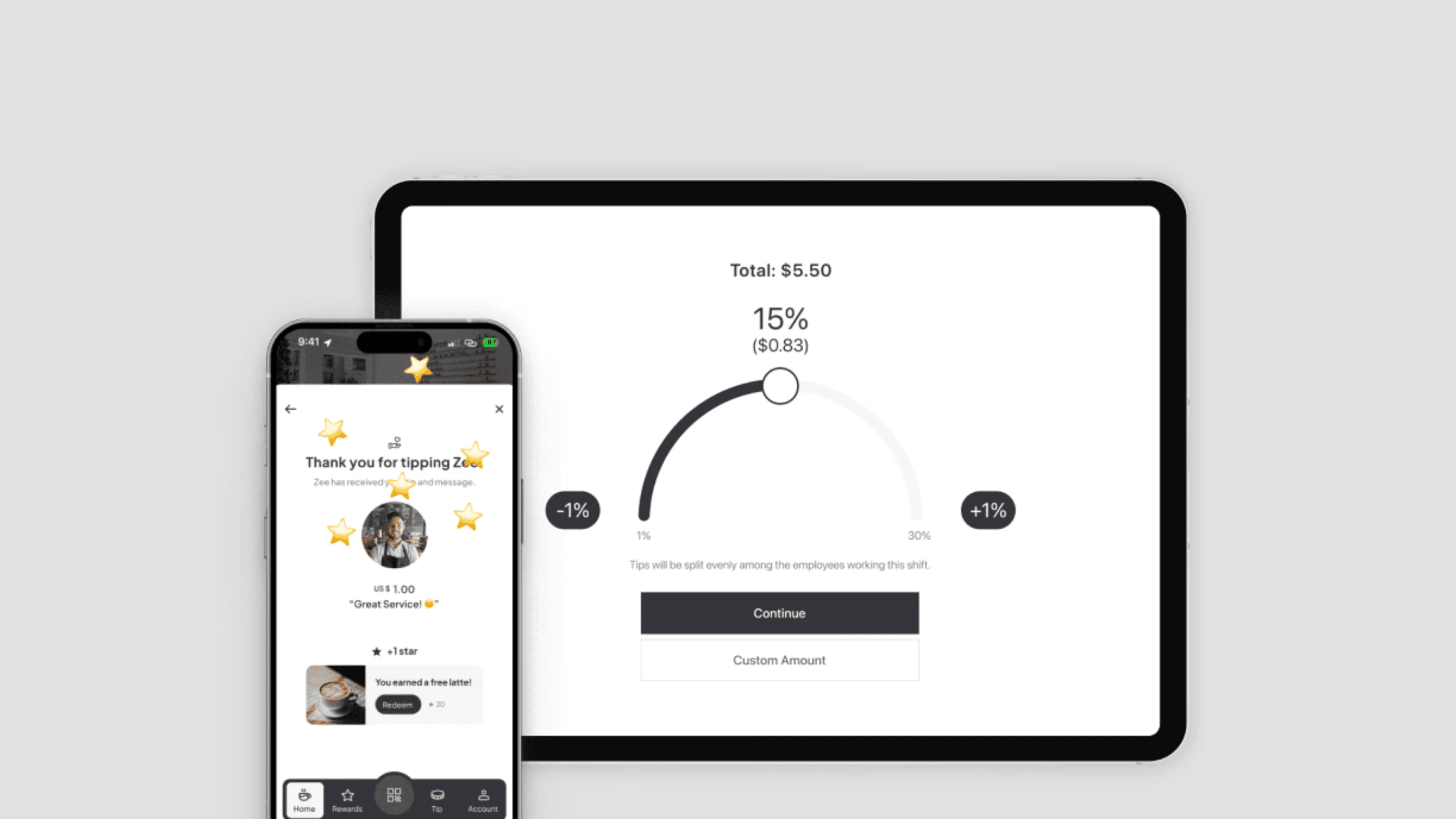
Blend: A solution that combines a mobile app, a POS system, and physical artifacts to reimagine the tipping experience at local cafes.
Blend POS System
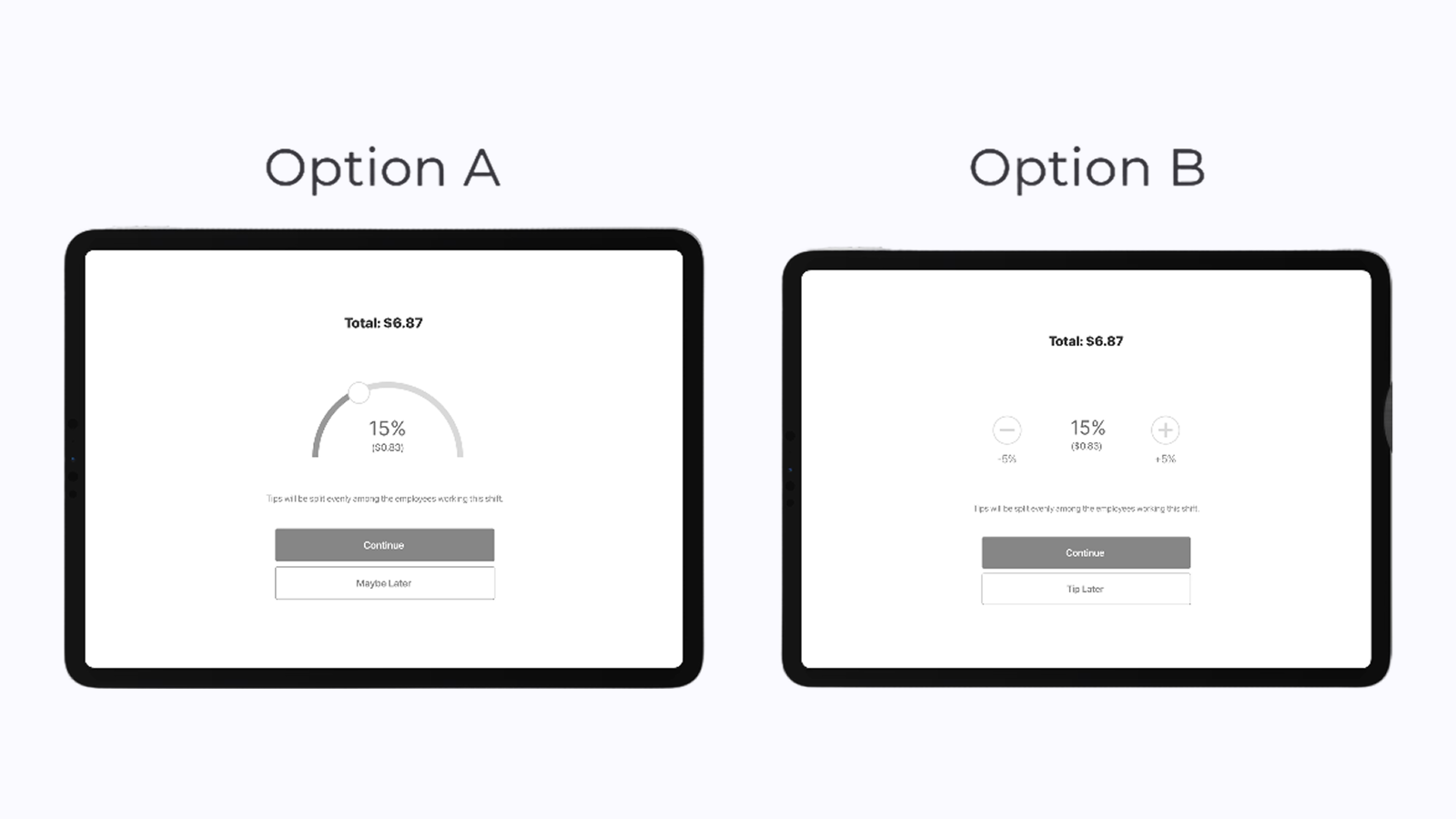
Tipping Slider & Tip Later Option
The custom tipping slider and "Tip Later" option give customers more control over their tipping decisions, reducing discomfort at the cashier counter.
Blend App
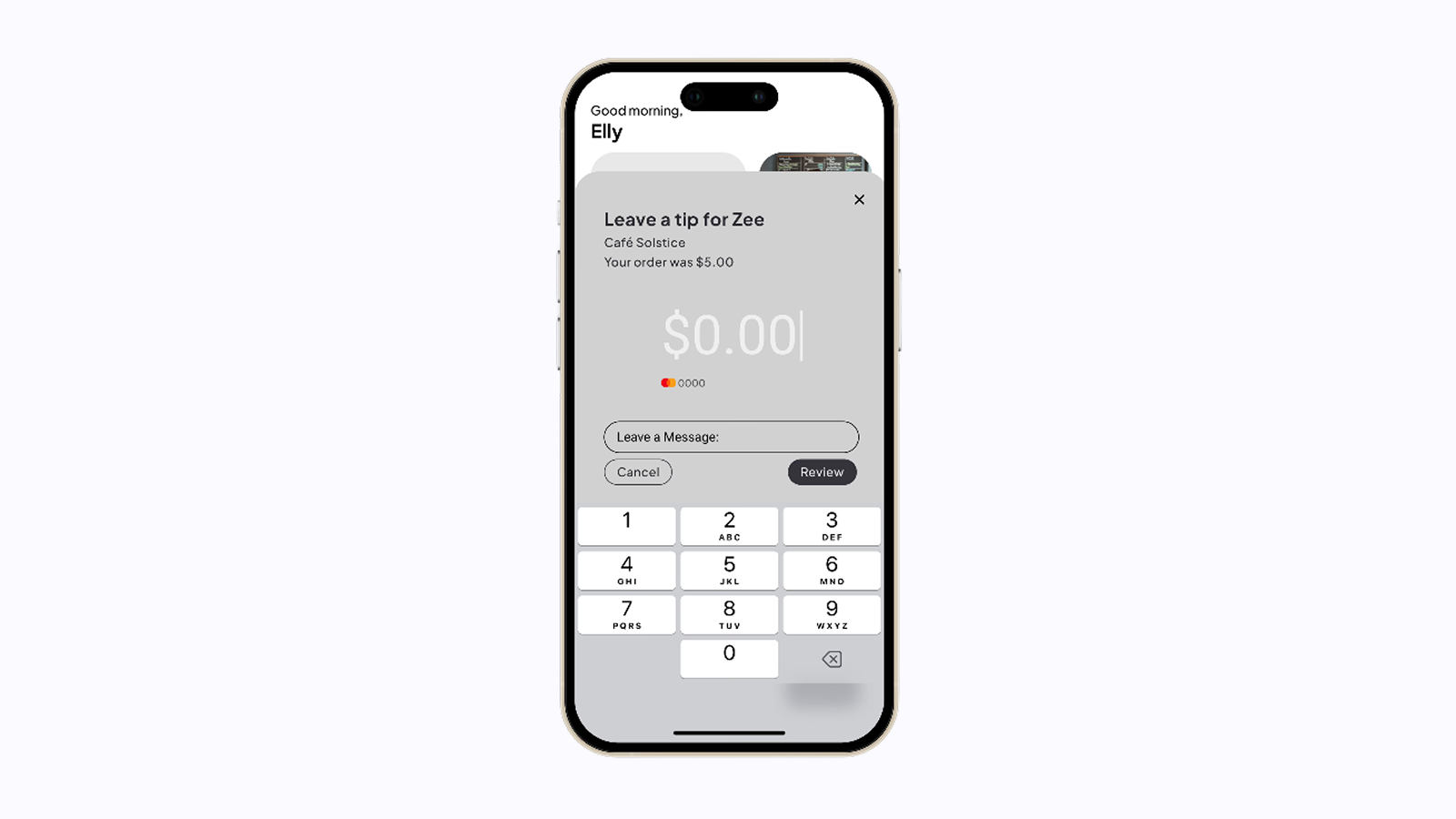
Real-time Updates & Direct Tipping
Customers get instant updates on orders and rewards. They can tip any barista anytime, making the cafe experience more convenient and personal.
Blend App
Custom Messages & Track Rewards
Customers can send personal "Thank You" messages to baristas and easily track their cafe visits and reward points, creating a more engaging and rewarding tipping experience.
Blend App
Baristas Appreciation & Tips Track
Baristas can view their daily tip earnings and read customer "Thank You" messages, providing baristas with meaningful feedback and fostering friendly connections with customers.
Research
Investigated current tipping experiences at cafes.
Field Investigation
Our team visited 7 cafes to observe the tipping touch points, specifically the tipping screens such as tipping options, amount, user flow, and the interaction between employees and customers at that point.
Interview with Customers & Baristas
We conducted 15-minute semi-structured interviews with 4 customers and 3 baristas in real cafe settings to understand both the opinions of service recipients and providers on tipping at cafes.
Define the Pain Points
01
The current tipping process hinders customers from fully reflecting on their service experience.
The tipping process requires customers to make tipping decisions at the point of sale, before receiving their orders and experiencing the service, leading to a less genuine tipping experience.
02
Digital tipping screens lack a human connection element and feel transactional.
The widespread use of digital tipping screens fails to recognize the human connection between customers and baristas, leading to an interaction that feels impersonal and obligatory.
03
Customers have limited agency over the tipping amount and may not always tip their desired amount.
Customers often encounter pre-set tipping options that may not reflect their desired level of appreciation, and social discomfort prevents them from choosing a custom tipping amount.
04
Baristas feel less rewarded and appreciated in the current tipping process.
As current tips made through digital screens may not be directly attributed to their individual efforts, it potentially impacts their motivation and job satisfaction.
Personae
Based on our research, we crafted two personae that informed our design.
Ideation
How might we redesign the tipping experience at local cafes to be more meaningful for customers and more rewarding for employees?
Define HMW's
Meaningful for customers
Preserve agency in self-tipping. Establish transparency in who is tipped.
Rewarding for employees
Remove tip-watching discomfort. Provide instant gratification for employees.
Initial Ideation Session
During our ideation session, we used bodystorming, role playing, and other methods to come up with ideas from speculative to more practical ones.
Customer Journey Mapping
To ensure our ideas were better implemented within the existing café infrastructure, we crafted the customer journey map of current customers to identify their pain points at different touch points throughout the cafe services.
Down Selection
Based on our research, we created 5 down-selection principles:
01 Human-centric
Emphasizes the human element of the cafe service.
02 Comfort
Alleviates social discomfort associated with tipping.
03 Agency
Restores customer control over tipping practices.
04 Holistic
Integrates both digital and physical interaction points.
05 Feasible
Allows for timely and cost-effective prototyping.
Following our down-selection principles, we used dot voting to down-select our ideas.
Final Idea
We realized that we can combine our ideas in different touch points and go beyond the tipping touch point to design for the entire cafe experience. Therefore, we decided that our design idea can expand from pay & tip to customer service.
Competitive Analysis
Compared to Square and Stripe, Blend focuses on the human-connection element and encourages tipping rather than facilitating full payments. Compared to Joe, Blend serves a larger scale of cafes and creates a tipping ecosystem of different local cafes.
Experience Prototyping
Tested the Initial Design.
Experience Prototyping Setup
We set up a mock cafe in the MHCI+D Studio. This included a high table as the counter, a projected cafe background, a POS terminal, pastries, mugs, creamer, a menu, and clear signage guiding participants through the ordering and pickup process. This immersive setup allowed us to observe participants' interactions with our design and their decision-making process in a context closely resembling a real cafe.
With this setup, we performed our key tasks:
Roleplaying
One team member acted as the barista, allowing participants to immerse themselves in the café setting and a realistic interaction.
A/B Testing
We aimed to evaluate participants' attitudes towards the "Tip Later" function and conduct A/B testing on the "Tip Now" screen interaction.
Blend App
We assessed their attitudes towards the "Tip Later" notifications and evaluated the user flow and interaction of "Tip Later" on the app.
Employee Stamp
We observed if participants noticed the employee stamp and examined how they interpreted the information presented on it.
Iteration
Refined the design based on participants' feedback.
Blend POS System
Finding 1
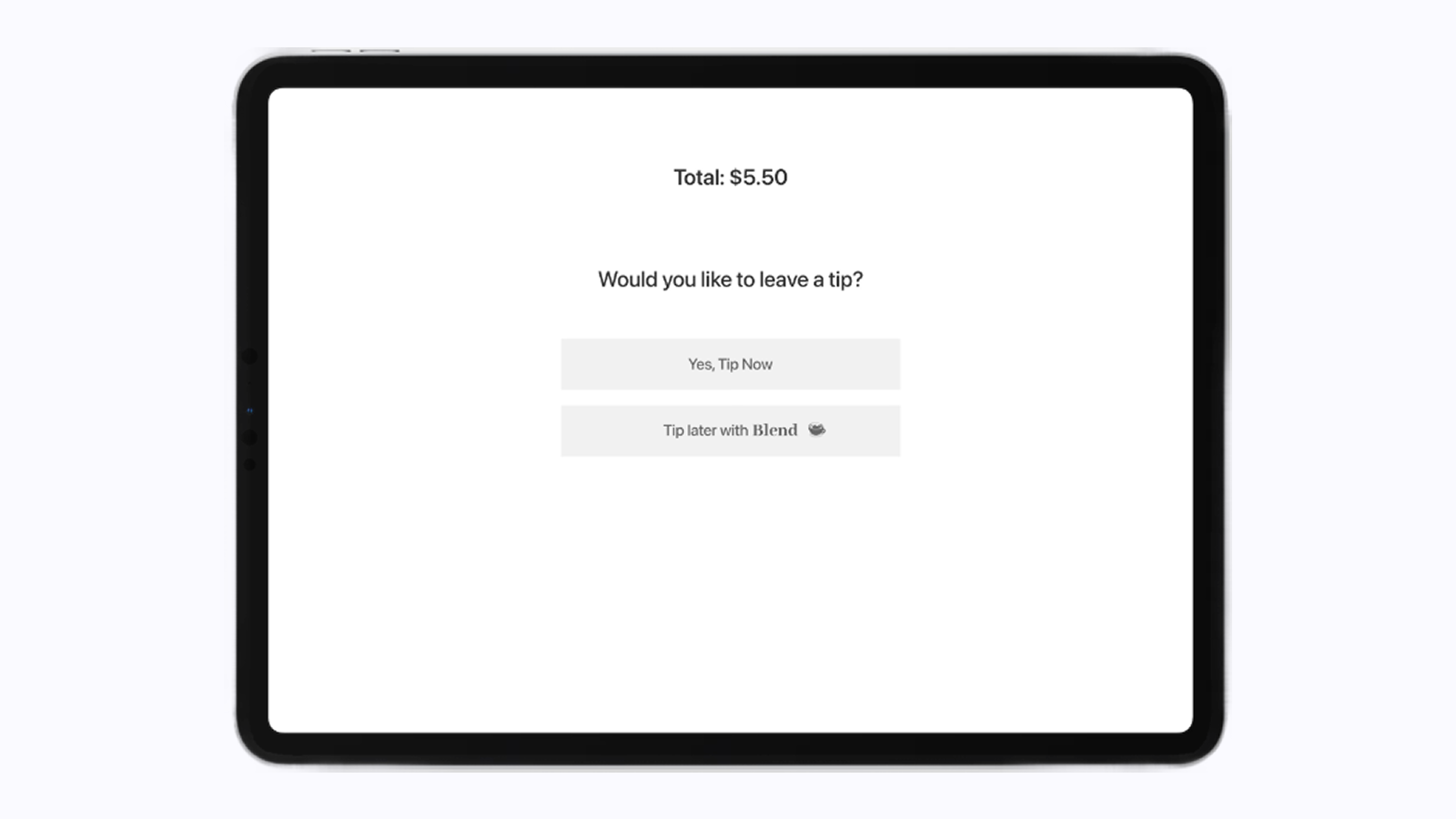
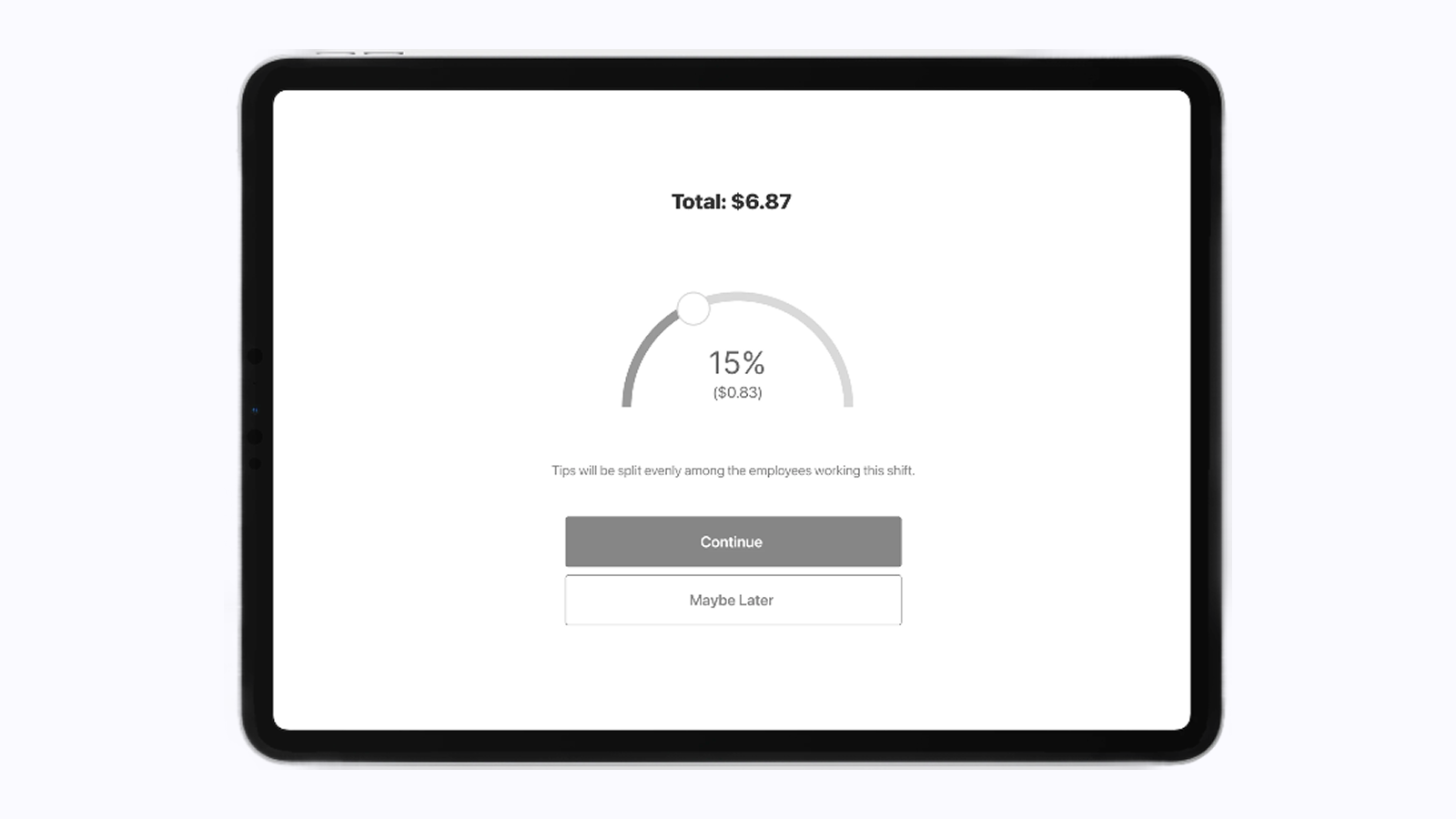
Participants expressed confusion about the "Maybe Later" option on the POS system, lacking clarity and instructions on what it is and how to use it.
If it takes me to the blend app, then maybe I'd like to see some indications on the POS system.
I didn't know what it ['maybe later'] meant and what it led to. I felt anxious to click on that.
Solution 1
We separated the "Tip Later" option from the immediate tipping options to clearly differentiate the two choices, and renamed "Maybe Later" to "Tip Later with Blend."
Finding 2
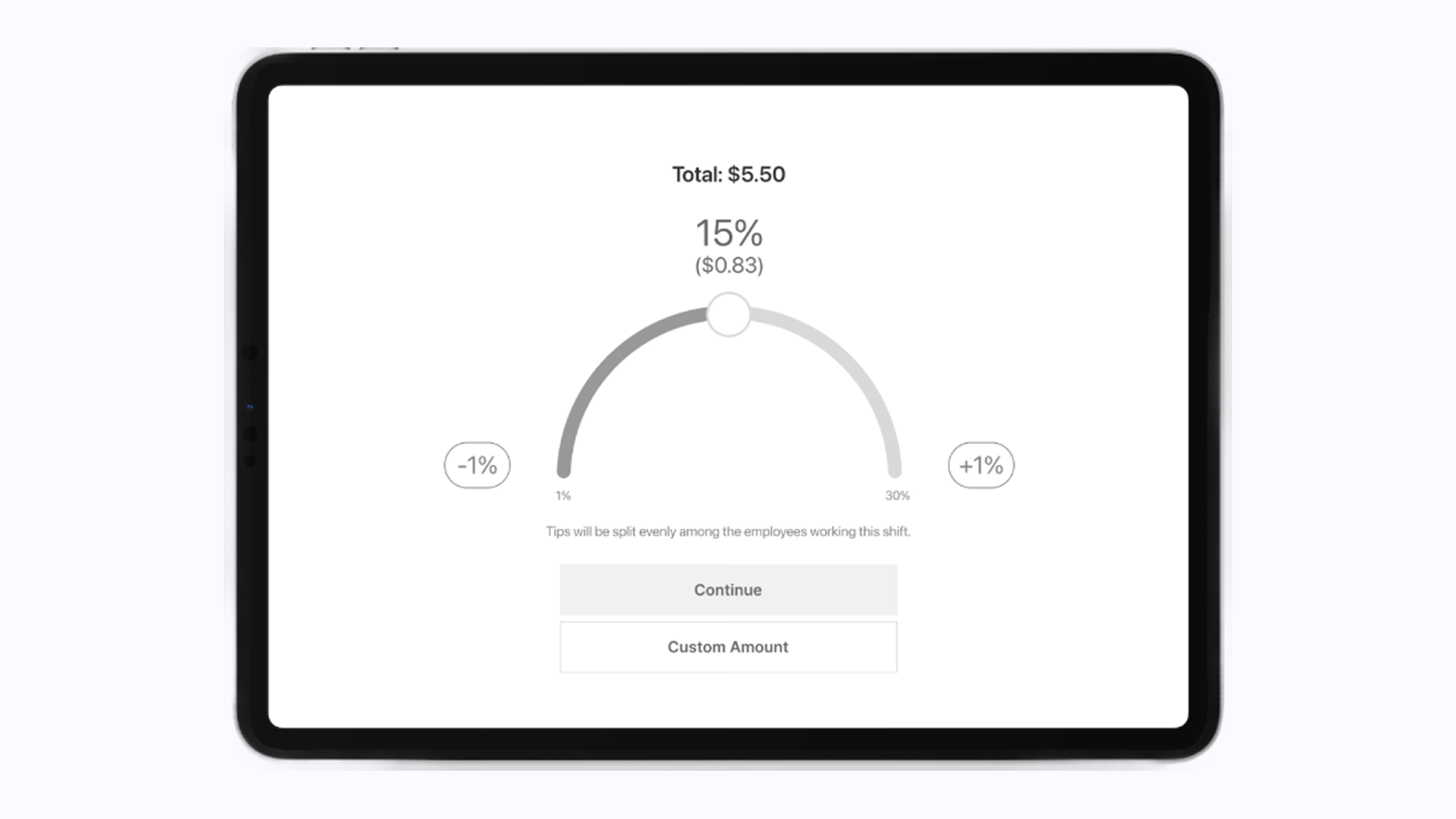
Participants appreciated the agency provided by the slider design for tipping, but some struggled to set precise percentages, leading to increased anxiety during the process.
I like the tip slider, it's a fun interaction. It's a reward for spending money.
I wish there was more customizability, like click the button and enter a specific percentage or amount.
Solution 2
We retained the slider for precise tipping control while adding "-1%" and "+1%" buttons for faster, incremental adjustments, balancing flexibility with efficiency in the tipping process.
Blend App
Finding 3
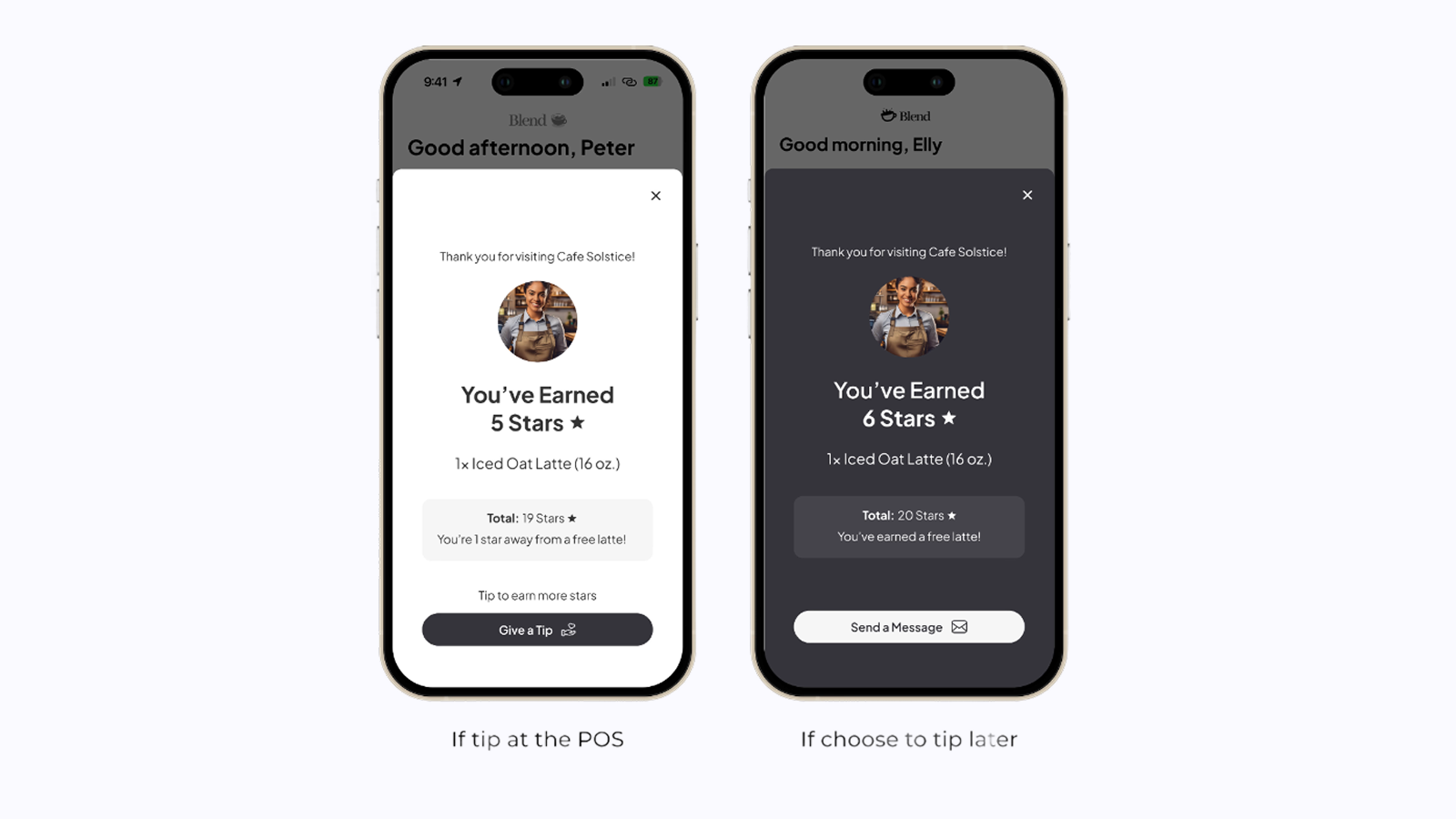
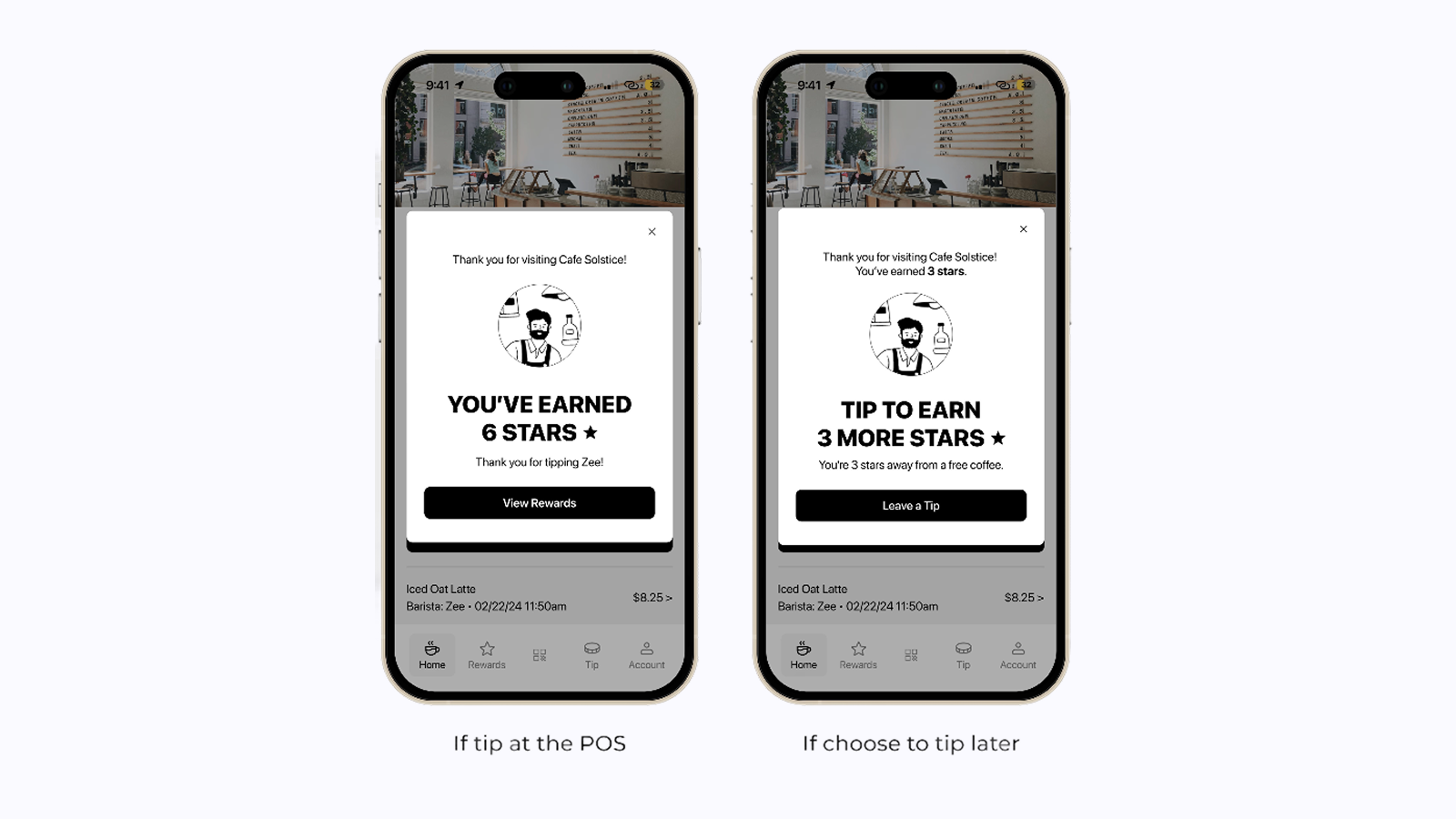
Participants were confused about the meaning of reward stars and wanted earlier visibility of their current rewards progress, particularly in relation to their tipping behavior.
I don't know what a star means.
So I have 20 stars?? I think I should have an indicator how many stars that I have currently. Maybe I would've tipped more if I knew I was at 19 and I need x amount to get a certain reward.
Solution 3
We display the customer's total rewards immediately upon app launch via QR code or notification, and implement distinct color schemes to clearly distinguish their choice of tipping now or later at the POS.
Finding 4
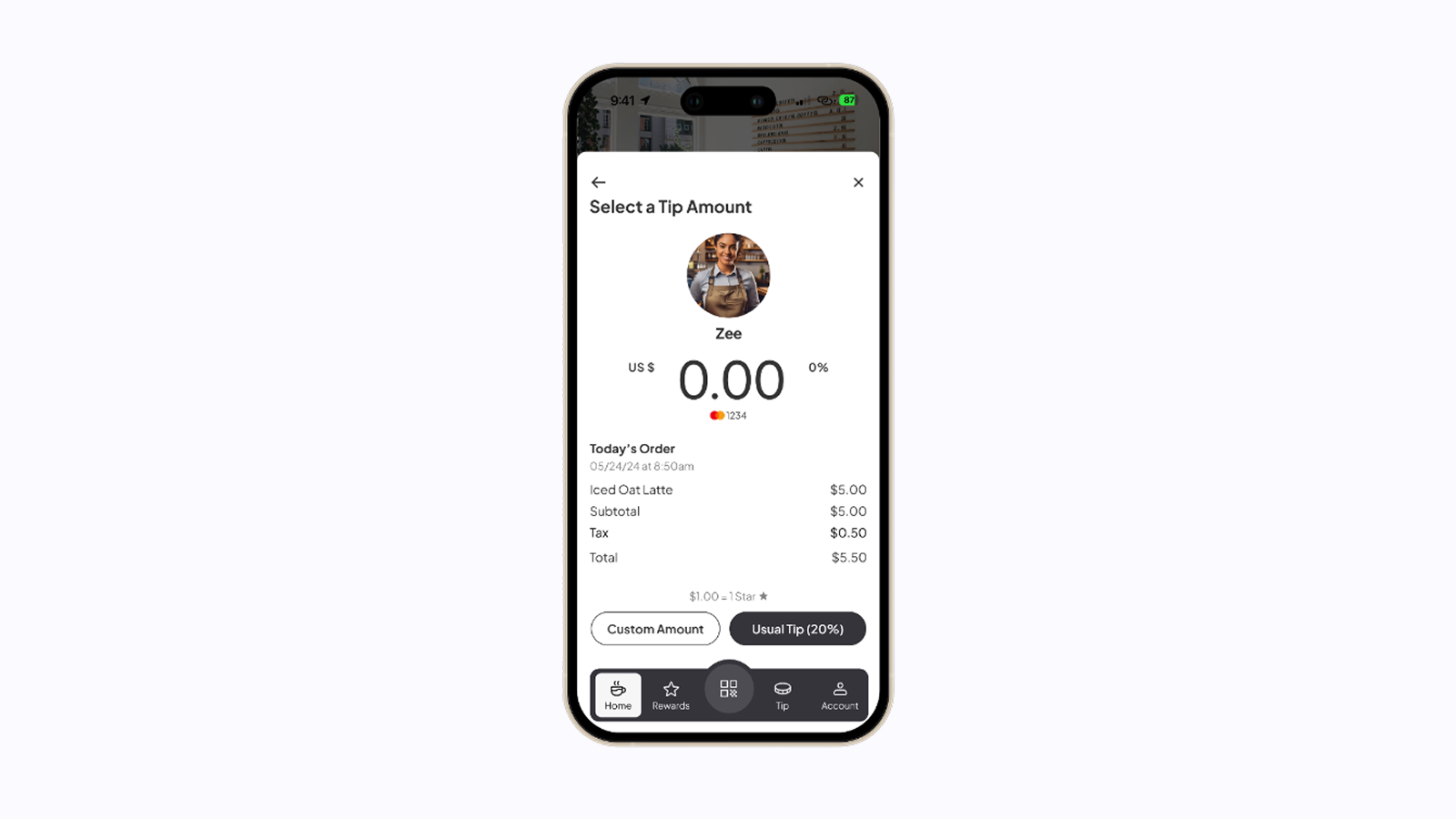
Participants expressed a need to review their order details before deciding on a tip amount, indicating a desire for more context in their tipping decisions.
I wish it suggested the tipping percentage so I had more idea how much I should tip.
I feel anxious entering the amount only knowing the total now.
Solution 4
We implement an order-breakdown feature, introduce "Usual Tip" options, and display the monetary value of each reward star to provide users with comprehensive information to make informed tipping decisions based on their order and potential rewards.
Final Prototype
Visualized our final design.
Service Blueprint
A service blueprint mapping the experience across Wait Time, Order, Tipping Options, Payment, Receive Order, and the Blend App.
Style Guide
A style guide covering typography, color (Brand 36343B, Black 333333, Gray scale, White), logo, components, and icons.
Validation
Validated our design with the real business.
What Worked Well
- 01All employees appreciated the human-to-human connection aspect that Blend facilitates, especially the opportunity to receive messages from customers.
- 02All employees appreciated the sliding function on the Point of Sale system, in particular noting the ability to see the correlation between tip amount and percentage.
- 03Employees believed that Blend would work well for returning customers who typically order the same things on a regular basis, validating our target customer base.
- 04Employees felt that with Blend they can focus more on their work and providing their service, rather than on the tips received.
Areas of Improvement & Next Steps
- 01
Splitting tips between multiple employees.
Employees prefer that customers have the option to tip more than one employee in instances where the barista and cashier both service the order.
Next Steps
Implement a feature that allows customers to split their tip between multiple employees who contributed to their order, such as cashiers and baristas.
- 02
Making sure "tip later" actually returns.
Some employees expressed concern over whether customers would forget to tip later, if they did not tip at the Point of Sale given that they may be in a rush.
Next Steps
Implement location-based reminders using geofencing and introduce opt-in auto-tipping for regular orders with the ability to adjust or opt-out at any time.
- 03
Avoiding new biases in employee behavior.
Some employees expressed concern about how the app might change employee behaviors, such as greater preference for the cashier position as it offers increased exposure to customers.
Next Steps
Implement flexible tipping options for cafes, allowing them to choose to only offer team-wide tipping.
Success Metrics
Measure the effectiveness and impact of Blend.
Stakeholder-related
Customer Satisfaction
Increase in overall customer satisfaction scores related to the tipping experience.
Employee Satisfaction
Improvement in employee satisfaction scores related to tipping and recognition.
Customer Retention
Increase in repeat customer visits.
App-related
App Adoption Rate
Percentage of customers who download and actively use the Blend app.
Personalized Message Rate
Frequency of customers leaving personalized messages with their tips.
Tip Later Conversion
Percentage of "tip later" options that result in an actual tip.
Reward Program Engagement
Number of customers actively participating in the reward program.
Business-related
Tip Frequency
Percentage of transactions that include a tip.
Average Tip Amount
Change in the average tip amount per transaction.
Key Takeaways
What I learned from this project?
Service Design: working with multiple touchpoints.
In my first experience with service design, I discovered the complexities of creating a holistic solution across multiple touchpoints, from digital interfaces to physical interactions. This project allowed us to deepen my understanding of designing comprehensive service experiences and the designer's role in facilitating meaningful interactions throughout the customer journey.
Balancing business needs and customer experience.
Our project approached the tipping redesign from both business and customer perspectives. While the 'tip later' feature might seem risky for immediate revenue, we aimed to create a win-win situation — emphasizing human connection and giving customers more control. This approach aims to foster customer loyalty and encourage thoughtful, potentially larger tips, transforming tipping from a transactional obligation into a genuine expression of appreciation.